

Specialist ambulance driver training
Courses built around your needs
Support through every step
Expert C1 training for your career
We provide structured ambulance driver training in the East of England for those progressing into paramedic and emergency driving roles. At Hamilton’s Driver Training Ltd, we explain the importance of holding a Category C1 licence for vehicles between 3.5 and 7.5 tonnes maximum authorised mass. This includes understanding that ambulances often exceed 3.5 tonnes when fully equipped. We deliver C1 training covering manoeuvring, safety procedures, and large vehicle controls, ensuring learners meet legal requirements and develop essential operational driving capability.
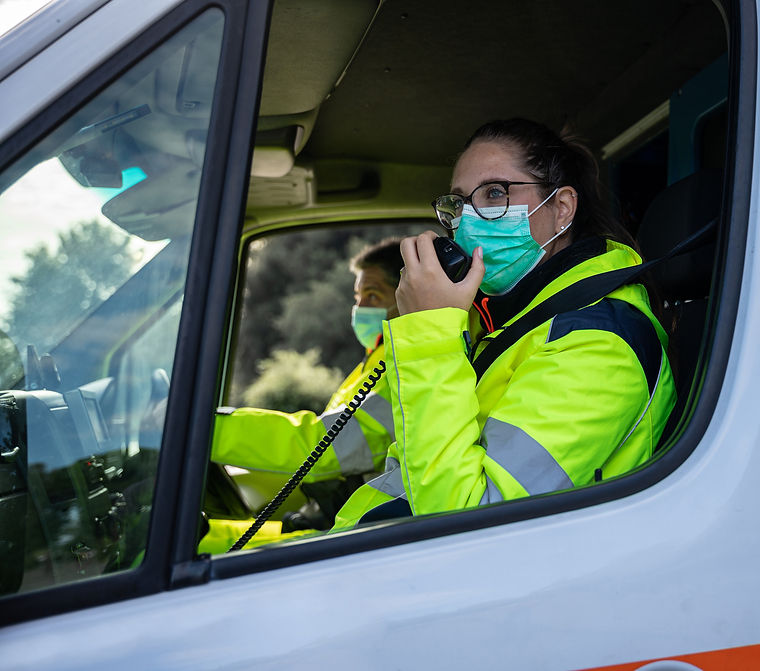
What you’ll learn on our C1 ambulance course
When you apply for one of our courses, we always consider your individual requirements and structure the course to suit you.
You will be trained to:
-
Perform safety checks on the vehicle; this will ensure it is safe for road use.
-
Drive heavy vehicles while ensuring you remain in complete control at all times.
-
Perform a full range of manoeuvres to ensure you are highly skilled and capable of safely driving an ambulance and pass your test.
-
On passing your test, you will receive a C1 licence that will enable you to start or apply for your chosen course.
The value of specialist ambulance driver training
Specialising in ambulance training means we focus on the unique challenges you’ll face on the road, from navigating tight spaces to managing emergencies safely. Our experience with C1 licences gives you a real advantage, and we’re one of the few providers in the East of England who truly understand what it takes. By choosing us, you’re investing in training that goes beyond passing a test; you're preparing for a vital role supporting your community. Along with the training, we also provide trailer and first aid training and help you to find jobs in the driving industry.
The Training
Our C1 driver training sessions will prepare you for the two practical tests you need to pass.
Module 3A is the reversing exercise.
This consists of an exercise reversing the vehicle in an S-shaped pattern into a bay.
Module 3B is the on-road driving test.
This takes place on the last training day most frequently from the DVSA Ipswich test centre.
During your practical road driving, the examiner will observe how you:
-
Use the vehicle controls.
-
Move away at an angle, uphill and downhill.
-
Pull up in various safe locations.
-
Use the mirrors.
-
Give appropriate signals.
-
Show awareness and anticipation of other road users’ intentions.
-
Manage your progress and control your vehicle's speed.
-
Deal with hazards.
-
Select a safe place to stop.
There will also be 10 minutes of independent driving, designed to evaluate your ability to drive safely while making independent decisions. The overall drive is 1 hour in total, and our C1 driver training courses will have you fully prepared to pass your test

Who needs a C1 licence to drive an ambulance?
A standard car licence covers vehicles up to 3.5 tonnes. Many larger ambulances exceed this limit, at which point a Category C1 licence may be required. The exact requirement depends on the vehicle and the role, so checking the specifications of the ambulance you intend to drive is a sensible first step.
For learners starting ambulance driver training, the C1 course provides an opportunity to develop the skills needed to safely handle a heavier vehicle. This includes becoming comfortable with the vehicle's size, positioning it accurately on the road and making good use of mirrors and observation. Hamilton’s Driver Training Ltd can talk you through the licence process before training begins. That can be particularly useful for learners who have only driven cars and have not previously handled a larger vehicle.
The training can also suit people preparing for paramedic driver training who already have professional driving experience. Existing skills can provide a useful starting point, while the course focuses on the areas that need more practice.
What happens after you pass your C1 test?
Passing the C1 test gives you the driving entitlement for the appropriate vehicle category. It does not, by itself, mean that you are qualified for every ambulance or emergency driving role.
The next stage depends on the job you want to pursue. An employer may have its own selection process, occupational requirements and additional training. Some roles can also involve further instruction once you join an organisation. Planning ahead can help you choose the right training route. For professional drivers considering a CPC course, it is worth discussing how CPC requirements fit with the type of driving work you plan to do. For advice about C1 training in Ipswich, speak to Hamilton’s Driver Training Ltd.
Contact the team to discuss your licence and next steps.